Plants
The Hidden Reason Every Backyard Needs a Sun-Drenched Sage Bush
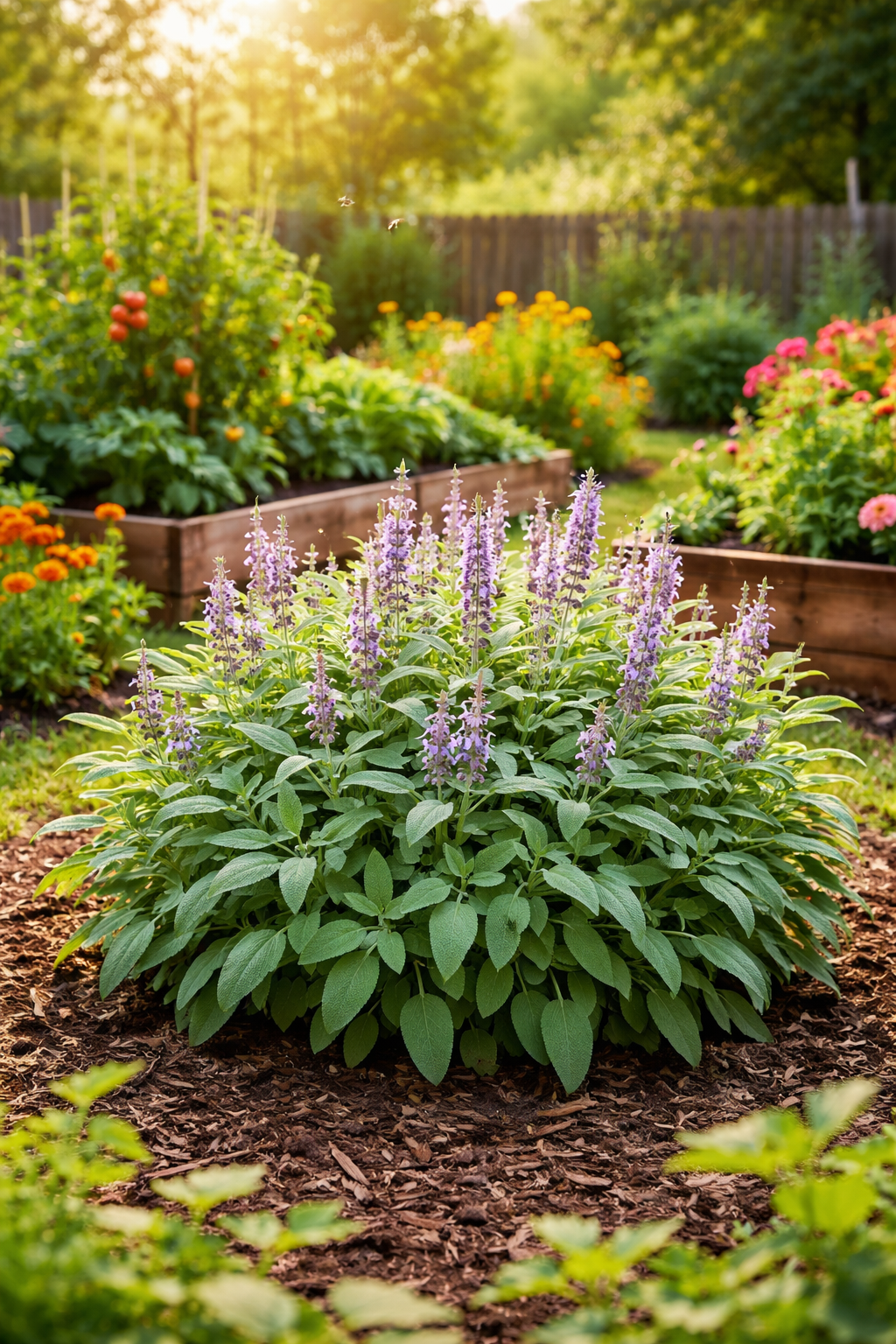
In the world of modern landscaping, we often prioritize aesthetics or shade. We plant hydrangeas for their pillowy blue clusters or maples for their fiery autumn canopy.
However, there is a humble, woody perennial that has been sidelined to the “herb garden” for too long: Common Sage (Salvia officinalis).
Sage is a biological anchor for the backyard ecosystem, a cognitive enhancer, and a natural pharmacy.
The “hidden reason” every backyard needs a sun-drenched sage bush isn’t just about the kitchen – it’s about the profound way this plant bridges the gap between environmental health and human wellness.
1. The Ecological Magnet: A Pollinator’s First Stop
If you want a garden that hums with life, you must plant sage. Unlike many modern floral hybrids that have been bred for looks at the expense of nectar, sage remains a high-yield nectar source that fuels the cycle of life in your backyard.
The Specialized Mechanics of the Salvia Bloom
Sage flowers possess a unique “lever” mechanism that is a marvel of evolutionary biology. When a bee lands on the lower lip of a sage blossom and probes deep for nectar, its head pushes against a small internal structure.
This triggers a botanical lever that dabs a fresh coat of pollen onto the bee’s back.
This ensures incredibly efficient cross-pollination. When that same bee visits the next flower, the pollen is perfectly positioned to be collected.
By planting sage, you aren’t just feeding bees; you are supporting the Bumblebee and Honeybee populations that are currently in decline.
A sun-drenched sage bush in full bloom can host dozens of different pollinator species in a single afternoon, turning your backyard into a critical corridor for local biodiversity.
2. The Cognitive “Scent-Tent”: Sage and Memory
The “hidden” benefit that ancient civilizations knew – and modern science is finally rediscovering – is sage’s impact on the human brain. The name Salvia comes from the Latin salvere, meaning “to be saved” or “to be well.”
Acetylcholinesterase Inhibition
Recent clinical studies have shown that sage extract can inhibit an enzyme called acetylcholinesterase (AChE).
This enzyme is responsible for breaking down acetylcholine, a neurotransmitter essential for memory, attention, and executive function.
By simply spending time in a garden where sage is growing, or by crushing a leaf and inhaling its terpene-rich aroma, you are engaging in a form of passive cognitive support.
For the backyard gardener, the sage bush becomes a sensory anchor. A morning ritual of brushing past the silver leaves releases 1,8-cineole and thujone, compounds that “wake up” the frontal cortex.
This makes your backyard not just a place of rest, but a place of mental clarity and sharpened focus.
3. The “Guardian” Effect: Natural Pest Repellency
If you grow vegetables, specifically brassicas (broccoli, kale, cabbage, and cauliflower), sage is your most valuable ally. Sage is a powerful companion plant that operates through a process known as “olfactory masking.”
Disrupting the Cabbage Moth
The strong, camphor-like scent of sage is overwhelming to the Cabbage White Butterfly and the Cabbage Moth.
When these pests fly over your garden looking for a specific chemical signature to lay their eggs, the volatile oils of the sun-drenched sage scramble their sensors.
By placing a sage bush at the entrance of your vegetable plot or interspersed among your greens, you create a chemical “shield” that reduces the need for organic or synthetic pesticides.
This “guardian” effect allows your food to grow cleaner and more resiliently, protected by the natural defenses of the sage.
4. A Year-Round Structural Anchor
Most perennials disappear in the winter, leaving the garden looking flat, brown, and lifeless. Sage is a “sub-shrub,” meaning it develops a woody base and stems that persist through the frost.
Visual Interest in the “Dead” Season
The velvet-textured, evergreen (or “ever-silver”) leaves of sage provide structure and color when everything else has gone dormant.
In the height of winter, a mature sage bush catching the low morning sun provides a focal point of soft grey-green that prevents the “winter blues” in your landscape design.
It is the bridge that keeps the garden feeling “alive” and structured from December through March, providing a permanent home for beneficial insects to overwinter in its woody base.
5. The Anti-Inflammatory “Garden Pharmacy”
Sage has been used for millennia as a “throat-soother” and general antiseptic. It contains high levels of rosmarinic acid, a potent anti-inflammatory compound that is concentrated in the leaves.
Immediate Backyard Relief
-
Sore Throats: A simple infusion of fresh sage leaves and hot water acts as a powerful astringent and antibacterial gargle, helping to shrink swollen tissues and kill pathogens.
-
Oral Health: Brushing a fresh, fuzzy sage leaf against the gums can reduce inflammation and help combat bad breath due to its antimicrobial volatile oils.
-
Skin Astringent: Cold sage tea applied to the skin can help soothe oily patches, minimize pores, or calm minor irritations.
Having a bush in the backyard means you are never more than a few steps away from a natural remedy for common daily ailments, reducing your reliance on over-the-counter chemicals.
The Secret to “Sun-Drenched” Success
To unlock these hidden benefits, the “sun-drenched” part of the title is non-negotiable. Sage is a child of the Mediterranean; it thrives in conditions that would kill more delicate plants.
1. Maximum Sunlight for Maximum Oils
The medicinal and aromatic compounds (the essential oils) in sage are produced as a defense mechanism against intense UV rays.
The more sunlight the bush receives, the higher the concentration of thujone, camphor, and rosmarinic acid.
A sage bush grown in the shade will be “leggy,” pale, and lack the potent “punch” that makes it so valuable for both health and pest control.
2. The “Dry Feet” Rule
Sage hates wet roots more than almost anything else. The hidden reason many people fail with sage is overwatering.
To truly thrive, plant your sage in well-draining soil – ideally a raised bed, a terracotta pot, or a rocky slope.
Once established, it is remarkably drought-tolerant, making it an ideal choice for the “low-water” or “xeriscape” gardener looking to conserve resources.
3 Rituals to Perform with Your Backyard Sage
To truly integrate the power of sage into your life, try these three simple backyard rituals:
-
The Morning Brush: Every morning, walk past your sage bush and run your hand over the leaves. Inhale deeply. Let the terpenes clear your morning “brain fog” and set a focused, calm tone for the day ahead.
-
The Summer Prune: In mid-summer, prune the top third of the bush. This prevents it from becoming too woody and encourages a fresh flush of the most aromatic, tender leaves. Dry these bundles upside down in a cool, dark place for winter teas and cooking.
-
The Pollinator Watch: On a sunny afternoon, sit near your sage for ten minutes. Watch the diversity of bees, hoverflies, and butterflies that visit. It is the fastest way to feel connected to the “pulse” of your local ecosystem and appreciate the life your garden supports.
The hidden reason every backyard needs a sun-drenched sage bush is that sage is a high-performer. It works for the bees, it works for your memory, it protects your vegetables, and it heals your body.

You must be logged in to post a comment Login