Plant Care, Soil & Tips
Creeping Thyme Lawn vs. Grass: Why You Should Make the Switch
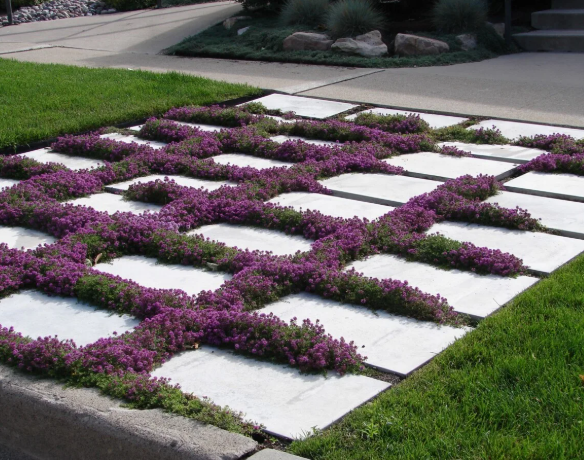
For homeowners looking to revamp their outdoor spaces, the debate between traditional grass lawns and alternative ground covers has gained traction. One standout option is creeping thyme, a hardy and attractive plant that offers several advantages over conventional grass. If you’re considering a lawn transformation, here’s why creeping thyme might be the superior choice.
1. Low Maintenance
One of the biggest reasons to switch to creeping thyme is its minimal upkeep. Unlike traditional grass, which requires regular mowing, fertilization, and aeration, creeping thyme is a slow-growing, low-profile plant that eliminates the need for frequent trimming. Additionally, it thrives without excessive fertilization, making it a time- and cost-efficient option.
2. Drought Resistance
Creeping thyme is exceptionally drought-tolerant compared to grass. Many grass varieties require frequent watering, especially during hot and dry seasons. In contrast, creeping thyme has deep roots that retain moisture efficiently, making it an excellent choice for water conservation. This means lower water bills and a more eco-friendly lawn.
3. Pest and Disease Resistance
Traditional grass lawns are often susceptible to pests like grubs and diseases such as brown patch or dollar spot. Creeping thyme, on the other hand, has natural antimicrobial and insect-repelling properties. Its essential oils help deter common lawn pests, reducing the need for chemical pesticides.
4. Aesthetic Appeal
Creeping thyme adds a unique charm to any landscape with its lush, mat-like growth and vibrant blossoms. Depending on the variety, it produces stunning purple, pink, or white flowers, attracting beneficial pollinators like bees and butterflies. Unlike grass, which tends to look dull in colder months, creeping thyme retains its beauty year-round.
5. Foot Traffic Durability
While grass can become patchy and worn down in high-traffic areas, creeping thyme is surprisingly resilient. It can handle moderate foot traffic, making it ideal for walkways, patios, and play areas. Plus, stepping on thyme releases a pleasant, herbal fragrance, enhancing the sensory experience of your outdoor space.
6. Weed Suppression
Weeds are a constant battle for grass lawn owners, requiring herbicides and manual weeding. Creeping thyme grows densely, leaving little room for weeds to establish. Once fully established, it naturally suppresses weed growth, further reducing lawn maintenance efforts.
7. Environmental Benefits
Switching to creeping thyme contributes to a healthier ecosystem. Grass lawns often require synthetic fertilizers, pesticides, and excessive watering, which can negatively impact local water sources and wildlife. Creeping thyme, being a naturally hardy and self-sustaining plant, minimizes the need for harmful chemicals and conserves resources.
Making the Switch
If you’re ready to replace your grass lawn with creeping thyme, the transition process is straightforward. You can start by:
- Removing patches of grass where you want thyme to grow.
- Planting thyme plugs or sowing seeds in well-drained soil.
- Watering moderately until the plants establish roots.
- Enjoying a beautiful, hassle-free lawn with minimal upkeep.
Final Thoughts
Creeping thyme is an excellent alternative to traditional grass, offering beauty, durability, and sustainability. By making the switch, you can enjoy a visually stunning, low-maintenance, and eco-friendly lawn that thrives in various conditions. Whether you’re looking for an aesthetic upgrade or a more practical solution for lawn care, creeping thyme is a smart and rewarding choice.

You must be logged in to post a comment Login