Home Remedies
Put Bay Leaves in Salt: 7 Traditional Uses You Should Know
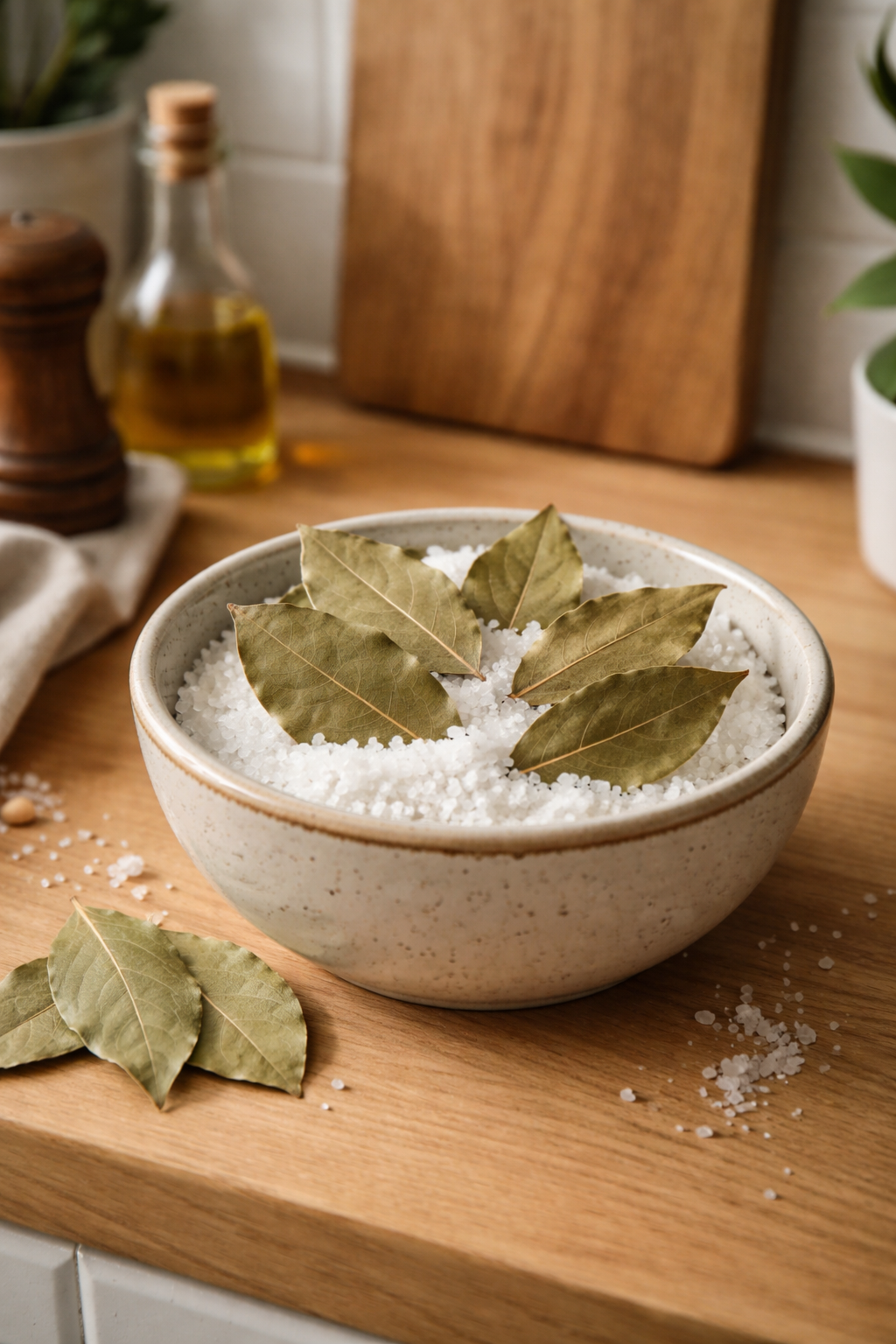
Bay leaves have been valued for centuries in kitchens, herbal traditions, and household rituals.
Known for their distinctive aroma and culinary role in soups and stews, bay leaves also carry a long history of traditional uses beyond cooking.
The plant most commonly used for culinary bay leaves is Laurus nobilis, an evergreen native to the Mediterranean region.
When combined with salt – another substance historically associated with preservation, purification, and moisture control – bay leaves create a simple mixture that has been used in various traditional household practices.
Why Combine Bay Leaves and Salt?
Both ingredients offer useful properties.
Bay leaves contain aromatic compounds such as cineole, eugenol, and pinene. These compounds contribute to their fragrance and may provide mild antimicrobial or insect-repelling effects.
Salt, on the other hand, has long been used as a natural preservative because it absorbs moisture and creates an environment where many microbes struggle to grow.
When bay leaves are placed in salt, the salt helps preserve the leaves while allowing their aroma to slowly diffuse into the surrounding air.
This combination has therefore been used for scenting spaces, reducing moisture, and traditional home rituals.
1. Natural Air Freshening
One of the simplest traditional uses of bay leaves in salt is as a natural air freshener.
Salt absorbs moisture from the air, while bay leaves slowly release their aromatic oils. Together, they can help reduce stale odors in enclosed spaces.
This mixture has been placed in small bowls in areas such as:
- Kitchens
- Pantries
- Closets
- Storage cabinets
The aroma of bay leaves is subtle but refreshing, offering an herbal scent that many people find calming.
To try this method, place a small bowl of coarse salt and bury two or three dried bay leaves inside. Replace the mixture every few weeks as the aroma fades.
2. Moisture Control in Small Spaces
Salt is hygroscopic, meaning it attracts and holds water molecules from the air. Because of this property, bowls of salt have traditionally been used to help reduce mild humidity in small areas.
Adding bay leaves enhances the mixture by providing a fresh scent while the salt absorbs excess moisture.
This method has commonly been used in:
- Pantry shelves
- Linen closets
- Shoe cabinets
- Storage drawers
While it cannot replace a dehumidifier in very damp spaces, it may help in mildly humid environments.
3. Pantry Pest Deterrent
Bay leaves have long been used in food storage areas to discourage pantry pests such as moths and certain beetles.
The aromatic compounds released by the leaves may be unpleasant to some insects.
Placing bay leaves in salt bowls or sprinkling a salt and bay leaf mixture in pantry corners has been a traditional way to help keep storage spaces fresh.
It is important to note that this is a traditional practice and not a guaranteed pest control method. However, many households continue using it as a natural preventive measure.
4. Natural Refrigerator Odor Absorber
Refrigerators can develop odors from stored foods.
Salt helps absorb moisture and odors, while bay leaves add a fresh herbal scent.
A small bowl of salt with crushed bay leaves can be placed at the back of the refrigerator to help neutralize smells. Replace the mixture every two to three weeks for best results.
This simple method offers a natural alternative to chemical deodorizing products.
5. Aromatic Kitchen Cleaner Additive
Another traditional use involves grinding bay leaves and mixing them with coarse salt to create a mildly abrasive cleaning mixture.
Salt acts as a gentle scrubbing agent, while bay leaves contribute a pleasant scent.
This mixture has been used for cleaning surfaces such as:
- Wooden cutting boards
- Mortars and pestles
- Ceramic bowls
When combined with a small amount of lemon juice or vinegar, the mixture becomes a natural cleaning paste.
Always rinse thoroughly after cleaning food preparation surfaces.
6. Traditional Household Rituals

You must be logged in to post a comment Login