Backyard Composting
The Chicken Tunnel: Let Your Chickens Weed and Pest-Control Your Garden
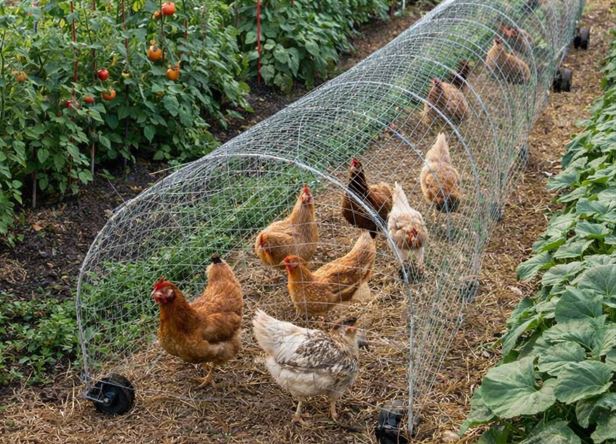
Chickens are some of the most underrated garden workers on earth. They scratch weeds out by the roots, devour insects and larvae, fertilize the soil, and aerate compacted ground – all for free.
Yet most gardeners keep chickens completely away from their vegetable beds because free-ranging birds will happily destroy seedlings, dig up roots, and trample delicate plants.
That’s where the chicken tunnel changes everything.
A chicken tunnel is a simple, movable fenced corridor that allows chickens to patrol your garden without touching your crops.
Instead of fencing chickens out of the garden, you fence them into controlled pathways that run between garden rows or around planting beds.
The birds do what they naturally love to do – scratch, peck, forage, and fertilize – while your vegetables remain perfectly safe.
The result is one of the most sustainable, chemical-free gardening systems available. Weeds disappear. Pests decline. Soil health improves. And your workload drops dramatically.
What a Chicken Tunnel Really Is
A chicken tunnel is a narrow run made from wire fencing or hardware cloth, shaped into a long corridor. It sits between garden rows, along raised bed edges, or around the perimeter of planting areas.
Chickens walk inside the tunnel, scratching and pecking at the soil on either side of the fence, but they can’t reach your vegetables.
You simply move the tunnel slowly across your garden. Each section of soil gets “worked” by chickens for a short period before you shift them to the next area. Instead of locking chickens into one fixed run, you bring the run to the garden.
It’s a controlled foraging system that turns chickens into a living weed-and-pest-control crew.
Why Chickens Are Perfect Garden Helpers
Chickens evolved to forage all day long. Their natural behavior is exactly what gardeners need.
They hunt insects, larvae, beetles, slugs, and grubs. They scratch weed seedlings before they mature. They loosen compacted soil. They break up crusted surfaces.
They mix organic matter into the top layer of soil. And they fertilize as they move.
When used correctly, chickens can replace herbicides, insecticides, and much of your manual weeding. The problem has never been that chickens are destructive. The problem is that they’re uncontrolled.
The chicken tunnel gives them boundaries.
How the Chicken Tunnel Actually Works
Inside the tunnel, chickens forage exactly where you want them.
- They reach weeds growing along the edges of your beds.
- They scratch soil between rows.
- They expose pest larvae hiding in the ground.
- They fertilize lightly as they move.
What they cannot do is access your crops.
You control their movement by shifting the tunnel a few feet every one to three days. Over time, your entire garden gets naturally weeded, pest-controlled, aerated, and fertilized.
Instead of fighting weeds and pests with sprays and tools, you let chickens do the work for you.
Why Chicken Tunnels Are Better Than Free-Ranging
Free-ranging chickens cause three major problems in gardens.
- They eat young plants.
- They dig up roots.
- They destroy mulch and seedlings.
Chicken tunnels eliminate all three.
Chickens still forage naturally, but only in designated zones. Your crops remain untouched. You get all the benefits of chickens without the damage.
This controlled system is what makes chicken tunnels so powerful.
The Hidden Pest-Control Advantage
Most garden pests don’t live on plant leaves. They live in the soil.
- Grubs.
- Cutworms.
- Beetle larvae.
- Slug eggs.
- Fly larvae.
These pests overwinter and reproduce in garden beds. When chickens scratch along the edges of your beds, they expose and eat these pests before they ever reach your plants.
This breaks pest life cycles in a way sprays never can.
It’s preventive pest control, not reactive pest control.
Weed Control Without Chemicals
Chicken tunnels are incredibly effective weed suppressors.
- Chickens eat young weed seedlings.
- They scratch up shallow roots.
- They disturb germinating weed seeds.
- They prevent weeds from establishing.
Over time, weed pressure drops dramatically. Your garden becomes cleaner with less manual labor.
Instead of pulling weeds, you let chickens remove them before they ever become a problem.
Soil Improvement Without Tilling
Chickens naturally till soil lightly.
- They loosen compacted areas.
- They mix organic matter into the top layer.
- They improve oxygen flow to roots.
- They stimulate microbial activity.
Unlike mechanical tillers, they don’t destroy soil structure or beneficial fungi. They create living soil instead of dead soil.
Soil that chickens have worked becomes softer, richer, and more biologically active.
Natural Fertilization as They Work
Chicken manure is rich in nitrogen, phosphorus, potassium, and trace minerals.
As chickens move through the tunnel, they deposit small amounts of fertilizer across the soil surface. Because the manure is spread gradually, it doesn’t burn plants.
Over time, soil fertility improves naturally without synthetic fertilizers.
This is slow, gentle, long-term soil building.
How to Build a Simple Chicken Tunnel
A chicken tunnel doesn’t need to be complicated or expensive.
The simplest version uses welded wire fencing or hardware cloth shaped into a long rectangle or arch. The sides are secured together with zip ties or wire, and the tunnel is anchored to the ground with stakes or metal rods.
A typical tunnel is about 18–36 inches wide, 18–24 inches tall, and 6–12 feet long. You can make multiple sections and connect them for larger gardens.
Leave both ends open so chickens can enter and exit easily.
How to Use a Chicken Tunnel Properly
Place the tunnel between garden rows or along bed edges. Release chickens into the tunnel and let them forage for a few hours or all day, depending on how aggressively they scratch.
Move the tunnel every one to three days to a fresh area. Avoid leaving chickens in one spot too long, or they’ll over-scratch and disturb too much soil.
Timing matters.
Use chicken tunnels before planting, after harvest, between crop rotations, and around mature plants. Avoid placing tunnels directly next to tiny seedlings.
This keeps the system productive instead of destructive.
Where Chicken Tunnels Work Best
Chicken tunnels work beautifully in raised beds, row gardens, orchard edges, berry patches, greenhouse aisles, compost zones, and along fence lines.
They’re especially effective around high-value crops like tomatoes, peppers, lettuce, and brassicas, where pest pressure and weeds are constant challenges.
How Many Chickens Should Use a Tunnel?
A small tunnel works best with two to six chickens. More birds require larger tunnels or more frequent movement.
Overcrowding leads to excessive scratching and soil disturbance.
The goal is steady, gentle soil work – not destruction.
Common Mistakes to Avoid
- Leaving chickens too long in one spot causes over-scratching.
- Placing tunnels over tiny seedlings leads to damage.
- Using weak fencing allows escapes.
- Not anchoring tunnels properly invites predators.
- Ignoring shade and water access stresses birds.
Fixing these issues makes the system nearly foolproof.
Why This Method Is So Sustainable
Chicken tunnels eliminate the need for herbicides, insecticides, synthetic fertilizers, and mechanical tillers.
They reduce weed pressure, pest populations, soil compaction, and labor hours.
They improve soil health, crop resilience, and garden productivity.
It’s one of the most sustainable garden systems available.
The chicken tunnel is one of the smartest, simplest, and most effective garden hacks available.
It turns your chickens into weed control machines, pest exterminators, soil aerators, and natural fertilizers – all without damaging your crops.

You must be logged in to post a comment Login