Growing Vegetables
Growing Peppers in Hanging Plastic Bags: A Space-Saving Gardening Solution
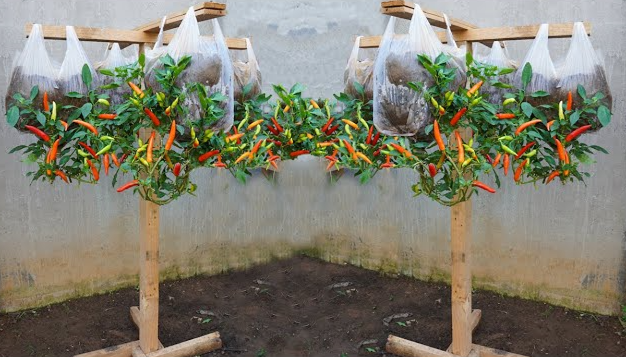
Growing peppers in hanging plastic bags can be a creative and efficient way to utilize limited space while still enjoying a bountiful harvest. Here’s a simple guide to get you started:
Materials Needed:
- Plastic bags: Use durable, UV-resistant plastic bags with drainage holes at the bottom. You can repurpose old grocery bags or purchase purpose-made grow bags.
- Potting soil: Choose a high-quality potting mix suitable for vegetables.
- Pepper seeds or seedlings: Select pepper varieties suited for container gardening and your climate.
- Fertilizer: Opt for a balanced fertilizer suitable for vegetables.
Steps to Grow Peppers in Hanging Plastic Bags:
- Preparation: Fill each plastic bag with potting soil, leaving a few inches of space at the top. Ensure there are drainage holes at the bottom to prevent waterlogging.
- Planting: Plant pepper seeds or seedlings in the center of each bag according to the recommended spacing for the variety you’re growing. If planting seeds, follow the instructions on the seed packet for depth and spacing.
- Watering: Water the peppers thoroughly after planting to settle the soil. Check the bags regularly and water whenever the top inch of soil feels dry. Hanging bags may dry out more quickly than traditional pots, so monitor moisture levels closely.
- Fertilizing: Peppers are heavy feeders, so they will benefit from regular fertilization. Apply a balanced fertilizer according to the manufacturer’s instructions, typically every two to three weeks during the growing season.
- Support: As the pepper plants grow, they may require support to prevent them from tipping over. Consider adding stakes or trellises to provide stability, especially if growing larger pepper varieties.
- Sunlight: Hang the plastic bags in a location that receives full sunlight for at least six hours per day. Peppers thrive in warm, sunny conditions.
- Maintenance: Keep an eye out for pests and diseases, and address any issues promptly. Prune the pepper plants as needed to encourage bushier growth and better airflow.
- Harvesting: Most pepper varieties will begin producing fruit within a few months of planting. Harvest peppers when they reach the desired size and color, using scissors or pruning shears to avoid damaging the plants.
By following these steps, you can enjoy a productive pepper garden even in small spaces using hanging plastic bags. It’s a space-saving solution that doesn’t compromise on flavor or yield!

You must be logged in to post a comment Login